Event 1
Agus Cornpipe’s death
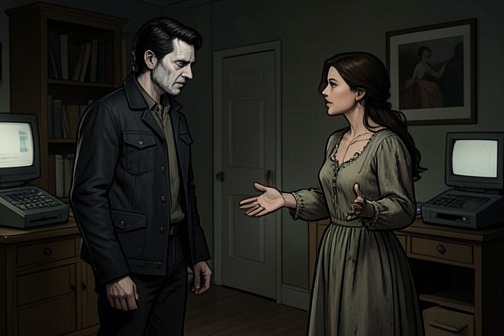
[Agus Cornpipe’s death](entity:event-recall-event-d66c57b6e193) is recounted through conflicting versions that never resolve into a definitive explanation. The accounts agree that he was shot dead before [Scarlet Blush](entity:character-recall-character-scarlet-blush-a9aca97da18b), but disagree about who killed him, how the shooting unfolded, and why he was targeted; the uncertainty itself shapes the story’s treatment of violence and memory.
## Background and Motives
[Agus Cornpipe](entity:character-recall-character-agus-cornpipe-cb59db190e8c) and Scarlet Blush had lived as fugitives before settling in a house found for them by [Iwan Angsa](entity:character-recall-character-iwan-angsa-2291d9126f72), who had been Agus’s friend. The couple believed they could finally live without being pursued. Their apparent safety was fragile: one account held that police sought Agus because he had killed a security guard during a burglary, only for the guard to turn out to be an off-duty police officer. Another attributed the pursuit to Scarlet’s wealthy father, who resented her elopement with a thief. The accounts do not establish which explanation, if either, prompted the killing.
Iwan’s later explanation places the death within a wider system in which violence could be commissioned rather than arising only from spontaneous street conflict. He says that businessmen hired the [Empty Hand](entity:character-recall-character-empty-hand-12a3ce1cc250) to kill, although its members were often mistaken for ordinary gang members; some had ties to police, and the group was known for using weapons. This context makes paid violence a possibility in the novel’s social world, but it does not identify the perpetrators of Agus’s killing.
## Conflicting Accounts of the Shooting
A newspaper account described Agus as armed and fighting back before soldiers shot him. Other versions said that soldiers stormed the house and fired without distinguishing their targets, killing him while he and Scarlet were eating dinner. A further rumor placed the shooting in their bedroom. The account judged most plausible by the people recounting the event was different again: a single sniper waited behind trees and shot Agus when he opened a window.
Despite these differences, every version preserves one fact: Scarlet saw Agus shot to death. The story offers no eyewitness account that can settle the details. Iwan says he was not there, and that no one could know for certain what happened except Scarlet and the men who carried it out. The perpetrators would never tell, while Scarlet would not speak about the event. Her silence leaves the death without a confirmed explanation and prevents rumor from becoming proof.
## Aftermath and Narrative Significance
When [Ajo Kawir](entity:character-recall-character-ajo-kawir-b0a44f5ecf61) asks how Agus really died, Iwan can only distinguish what is known from what is conjecture. Asked why Agus had to be killed, he points to the hostility toward thieves, the police’s unwillingness to deal with them, Agus’s estrangement from his family, and his father-in-law’s indifference to his fate. These remarks suggest several forms of abandonment and pressure, not a verified account of the decision to kill him.
The death also returns indirectly in Ajo’s own history. When Iwan examines Ajo after his sudden loss of erectile function, [Gecko](entity:character-recall-character-gecko-f32ba8fd83d3) refuses to explain that two policemen had entered Scarlet’s house and raped her. The withheld account connects the men’s intrusion into her home with Ajo’s condition, while showing how the event is obscured even among those who know part of it. Later, after leaving [Iteung](entity:character-recall-character-iteung-2fd0aee6ad34), Ajo hears again in memory the sound of the Tiger’s skull being struck; it overlaps with his wife’s sobbing, joining separate experiences of violence and loss in his consciousness. Across these episodes, the novel makes the consequences of violence recur even when its original circumstances remain unspeakable or unresolved.
## Violence as a Social System
Other parts of the story broaden the context without solving Agus’s death. Iwan tells [Uncle Bunny](entity:character-recall-character-uncle-bunny-ad0f70570133) that he wants him to kill a man, while later advising Ajo that prison could keep him safe from the Tiger’s men and help extinguish the anger consuming him. At the rubber plantation’s fighting arena, soldiers organize contests between men, including fighters said to have been brought from regions under military operations. These episodes portray violence as something directed, traded, or staged by people with power over its participants. Against that wider pattern, Agus’s killing remains both a private loss witnessed by Scarlet and a public story told in incompatible versions.
Event 2
Young Widow's exploitation by Mister Lebe
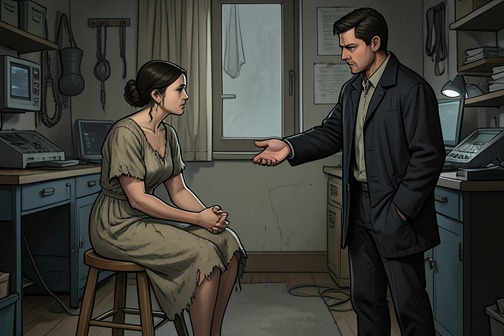
The Young Widow’s exploitation by Mister Lebe is a coercive arrangement built on bereavement, poverty, and dependence on housing. After her husband dies, Mister Lebe uses her inability to pay rent to demand access to her, then expands the abuse to include other men. Her eventual pregnancy does not bring support: when she asks him to take responsibility, he turns her out. The episode makes the rent itself a means of control, linking economic vulnerability to the narrowing of her ability to refuse or leave.
## Bereavement and Dependence
About six months after her husband’s death, the Young Widow has no savings, inheritance, or life insurance. She has no job or relatives to rely on, and must care for two small children; her eldest has just turned three. To survive, she sells household belongings, including a black-and-white television, a radio, a table, and an old chair, and approaches neighbors in the hope they will buy what remains.
Two months after the death, Mister Lebe comes to collect the rent. When she cannot pay and falls silent under his questions, he proposes that she need not pay if he can come to her room and have her company. His offer presents exploitation as a solution to the immediate threat of unpaid rent, but the condition makes clear that the housing security he controls is being exchanged for access to her.
## Repeated Visits and Escalation
Mister Lebe does not confine the arrangement to a single visit. He comes at unpredictable times, sometimes giving notice and sometimes arriving without warning, and takes the Young Widow to bed. The uncertainty is part of the control: the landlord’s access to the house becomes access to her, while her rent crisis leaves her with little practical room to resist.
The exploitation then widens beyond Mister Lebe. He begins bringing other men, first one and then others, eventually bringing two at once. When the Young Widow refuses, he threatens to throw her and her children out onto the street. Faced with the loss of their home, she submits. The threat makes the coercion explicit: her apparent compliance is produced by his power over the family’s housing, not freely given consent.
## Pregnancy, Expulsion, and the Episode’s Meaning
The accumulating harm is registered in the Young Widow’s description of pain: the pain in her chest grows deeper and wider until she no longer cares about the other pain. Then she becomes pregnant, without knowing who the father is. With no other apparent option, she asks Mister Lebe to take responsibility, hoping that if he will not marry her he might at least provide for the baby. Instead, he becomes angry and throws her out. The arrangement that had made shelter conditional on access now ends by stripping her and her children of shelter when its consequences demand care.
The episode’s chronology clarifies how quickly bereavement becomes material exposure: Mister Lebe seeks rent only two months after the husband’s death, while the account establishes that the Young Widow has been widowed for about six months by the time her story is told. Her lack of income and family support, her care of two young children, and the landlord’s ability to threaten their home converge to restrict her choices. The pregnancy does not resolve that dependence; it exposes its limits. After being expelled, she tells her harrowing story to Rani, who is sheltering her for the moment. The disclosure moves the episode from private coercion into the household where [Ajo Kawir](entity:character-recall-character-ajo-kawir-b0a44f5ecf61) hears it, and makes the consequences of Mister Lebe’s power visible beyond the rented room.
## Disclosure and Wider Consequences
After Mister Lebe throws her out, the Young Widow tells her harrowing story to Rani, who is sheltering her for the moment. The disclosure carries the consequences beyond the rented home: Ajo Kawir hears what happened and is immediately reminded of [Scarlet Blush](entity:character-recall-character-scarlet-blush-a9aca97da18b), of her suffering, and of the suffering he himself has borne. He responds by offering the Young Widow the small amount he has saved for a rainy day. The episode thus links the landlord’s coercion to a wider pattern of vulnerability, while showing how the account of one woman’s experience prompts a concrete act of assistance.
Event 3
Murder of the young widow's husband
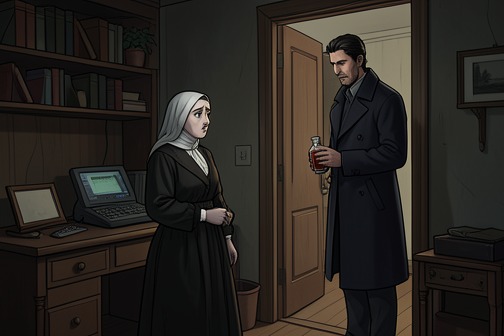
The murder of the young widow’s husband is a concealed crime that transforms her life: Mister Lebe arranges for a member of the [Empty Hand](entity:character-recall-character-empty-hand-12a3ce1cc250) to poison the musician, while the apparent symptoms of cholera disguise the killing. The revelation recasts the widow’s subsequent vulnerability as the consequence of deliberate violence and a wider structure of protection for the powerful.
## The Visit Before the Murder
Mister Lebe came to the family’s house at almost eleven one night, claiming he was checking on the property. Although the couple had paid rent, the house belonged to him, and the young widow felt unable to refuse him entry. Her husband was away practicing angklung for a performance. During the visit, Mister Lebe pressed the lonely and unwelcome possibility of her keeping him company; she resisted, despite the leverage he held as landlord.
The encounter establishes the imbalance that later makes the killing consequential. Mister Lebe could enter the couple’s home and test the widow’s boundaries under the cover of property ownership. Her love for her husband, [Iteung](entity:character-recall-character-iteung-2fd0aee6ad34) later explains, gave her no reason to betray him; the threat came from the landlord, not from any failing in the marriage.
## Poison Disguised as Illness
The musician became ill after a party following a performance, vomiting and suffering diarrhea. Many people believed he had died of cholera. Iteung reveals that this explanation was false: he had been poisoned. The resemblance to an illness allowed the murder to pass as a natural death, and the young widow herself never learned that her husband had been killed.
Iteung identifies the chain of responsibility directly. Mister Lebe paid someone from the Empty Hand to carry out the killing. The evidence does not identify the hired person or describe the method of poisoning, but it makes clear that the death was arranged rather than accidental and that Mister Lebe was its instigator.
## Aftermath and Significance
After her husband’s death, the widow had to live under Mister Lebe’s control as her landlord. He offered to waive her rent if she let him sleep in her room and keep him company. Later, he brought other men, and the threat of eviction left her unable to refuse them. When she became pregnant and asked him to take responsibility, he turned her out; she then told her story to Rani. The murder thus precedes a sequence of exploitation and displacement, while the widow remains unaware that the loss that made her vulnerable was itself engineered by Mister Lebe.
The account reaches the reader through Iteung’s disclosure to [Ajo Kawir](entity:character-recall-character-ajo-kawir-b0a44f5ecf61), not through the widow’s knowledge. That gap matters: what others take for a death from cholera is, in the telling, a paid killing protected by Mister Lebe’s local power. The revelation exposes both the violence behind the widow’s bereavement and the concealment that lets its consequences continue.
Event 4
Ajo Kawir and Iteung's first fight
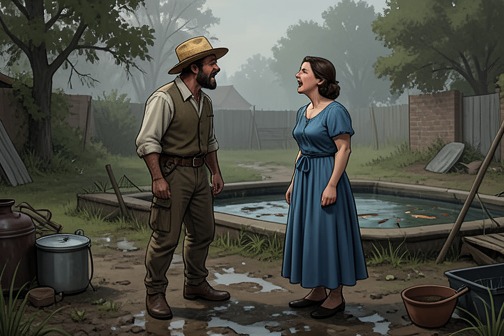
[Ajo Kawir and Iteung's first fight](entity:event-recall-event-5a169e303767) begins as an attempted attack on Mister Lebe and becomes a decisive encounter between two people prepared to meet violence with violence. At [Mister Lebe’s fishpond](entity:location-recall-location-e1c20d7f23ca), [Iteung](entity:character-recall-character-iteung-2fd0aee6ad34) stops Ajo from reaching the man he has come to confront. Their drawn-out struggle ends not with a clear victory but with both fighters exhausted, and Iteung’s account of the Young Widow’s husband reveals that the injustice behind Ajo’s mission is worse than he knew.
## Setting and Immediate Cause
Mister Lebe owns a fishpond with small bungalows and surrounding gardens, a place he often visits alone. Ajo sees the grounds as an ideal location for an ambush and goes there intending to get at Mister Lebe. He does not know that the businessman has a bodyguard.
That guard is Iteung, a young woman who intercepts Ajo on the footpath. She tells him she has been watching him and knows he has been targeting Mister Lebe. Her intervention turns Ajo’s planned attack into a direct confrontation with someone standing between him and his intended target.
## The Fight
Iteung warns Ajo that he will have to get past her before he can touch Mister Lebe. Ajo recognizes the phrasing as the kind of line found in the martial-arts comics he read as a child, borrowed from a librarian who travelled by bicycle. The moment briefly strikes him as comic, but it does not make him underestimate the danger: he has never hit a woman and initially only shoves Iteung aside.
Iteung answers with an unexpected display of skill. She catches Ajo’s arm, pins it behind his back, and throws him down. When he gets up, she raises her fists. Ajo cannot identify what martial art she has learned; he has no formal training himself and relies instead on punching, kicking, dodging, and taking an opening when one appears. He agrees to fight her, and their encounter becomes a contest between her practiced technique and his rough, reckless approach.
The struggle lasts for more than an hour. Iteung is strong and has stamina despite her delicate appearance, while Ajo’s willingness to keep fighting makes him difficult to subdue. Both land blows, and neither can end the contest quickly. At last, too tired to do more than trade weak punches, they collapse in the grass, gasping for breath. Their mutual exhaustion, rather than a decisive knockout, is the fight’s outcome.
## What the Encounter Reveals
The contest overturns Ajo’s assumption that he can simply push past the person guarding Mister Lebe. Iteung is not a passive obstacle: she can control his arm, throw him, withstand his attacks, and hold her own over a prolonged fight. Ajo, in turn, proves difficult to defeat not through formal martial-arts knowledge but through strength and a willingness to absorb punishment in order to retaliate.
Their brief exchange afterward leaves the result open to a measure of mutual respect. Iteung murmurs that Ajo is not bad; he answers that he can still take her. Neither claim settles who would win if they fought again. The ending preserves their rivalry as an unresolved balance between her skill and his persistence.
## The Young Widow and the Fight’s Stakes
The confrontation is rooted in Ajo’s response to what Mister Lebe has done to the Young Widow. When Iteung explains that nobody sent her and that she came because she had heard about the woman, Ajo asks whether she means the Young Widow. Their exchange establishes that they have arrived at the same target from a shared concern, even though Ajo first meets Iteung as the person blocking his way.
Iteung then tells Mister Lebe that the Young Widow loved her husband and had no reason to betray him. She says the musician did not die of cholera, as people believed after he became ill at a party following a performance: he was poisoned. The widow herself does not know that her husband was murdered. This revelation clarifies why Iteung has intervened and deepens the cause behind Ajo’s intended attack: the apparent illness concealed a killing, while the surviving woman remains unaware of the truth.
## Narrative Significance
The first fight establishes a pattern in which bodily conflict opens a route to information. Ajo reaches Mister Lebe’s fishpond expecting an ambush, but the guard he encounters is someone who shares his opposition to the businessman’s conduct. The scene changes the immediate question from whether Ajo can attack Mister Lebe to what lies beneath the accusation against him.
Its ending also resists the conventional certainty of a winner. Ajo and Iteung are left on equal terms, worn out by the encounter and still capable of answering one another. The fight introduces Iteung through action rather than explanation, then connects her physical resistance to her concern for the Young Widow and the concealed murder of her husband. The result is both an introduction to a formidable character and a disclosure of the violence concealed beneath the community’s account of the musician’s death.
Event 5
Ajo Kawir's challenge to the Tiger
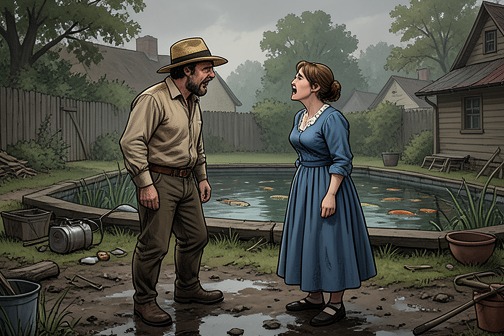
[Ajo Kawir](entity:character-recall-character-ajo-kawir-b0a44f5ecf61)’s challenge to the Tiger is the point at which a covert killing assignment becomes a public duel. Asked to act without exposing [Uncle Bunny](entity:character-recall-character-uncle-bunny-ad0f70570133)’s connection to the target, Ajo chooses a form of violence that can conceal its sponsor: a challenge whose visible rationale is a long-standing grudge. The choice protects Uncle Bunny’s name, but it also places Ajo’s own honor and safety at stake.
## Commission and Cover
Uncle Bunny wants the Tiger killed without any indication that the order came from him. Ajo proposes a duel as a means of accomplishing that goal while keeping the connection untraceable. Uncle Bunny praises his intelligence, and Ajo agrees to take the job, but insists on seeing the money. The exchange establishes both the arrangement’s practical terms and its disguise: Ajo is not to appear as an assassin acting for a patron, but as a challenger confronting the Tiger on his own account.
Ajo’s decision does not arise from a freely chosen personal feud. [Iwan Angsa](entity:character-recall-character-iwan-angsa-2291d9126f72) had instructed him to search for the Tiger secretly and to give a particular explanation for the pursuit. Ajo follows the instruction to describe the matter as an old grudge, but rejects secrecy as the method of finding his target. He calculates that an open challenge will make people less likely to think he is acting for Uncle Bunny. The duel is therefore at once a killing plan, a cover story, and a calculated public performance.
## The Challenge in [Ci Jaro](entity:location-recall-location-ci-jaro-17db10bfe5ae)
After eating at a food stall in Ci Jaro, Ajo asks its elderly owner where he can find the Tiger, whom he knows to be from the area. He speaks loudly enough for two motorcycle-taxi drivers nearby to hear, while pretending not to notice them and directing his question to the stall owner. The Tiger has not returned since his older brother died. The owner cannot say where he is, and has her own reason to want him found: he owes debts at her stall, which she wants repaid.
Ajo turns the uncertain search into an explicit challenge. He asks the owner to pass on the message if the Tiger returns or is seen: someone wants to fight him in a duel. Ajo says the Tiger may choose when and where, and that he will accept whatever terms the Tiger names. He also offers to settle the debts owed at the stall. The offer links the challenge to a concrete local grievance without establishing that Ajo himself has a personal claim against the Tiger; it makes the debt part of the message and gives the owner a stake in passing it on.
## Publicity, Risk, and Consequence
The stall falls quiet after Ajo announces the challenge. The owner looks at the two young men before returning to her cooking, and the motorcycle-taxi drivers exchange glances. Ajo lights a cigarette. [Gecko](entity:character-recall-character-gecko-f32ba8fd83d3) breaks the silence by asking what they owe, then pays from his pocket while checking that his knife remains there. These small reactions register the tension created by Ajo’s words: the duel is no longer only an arrangement between Ajo and Uncle Bunny, but a declaration overheard by possible intermediaries.
When the owner asks what business Ajo has with the Tiger, he answers with the explanation Iwan Angsa supplied: an old grudge that, if left unresolved, would last for seven generations. The phrase gives the pursuit the weight of inherited retribution, even though the account has already revealed its immediate political purpose as a way to hide Uncle Bunny’s involvement. The gap between the stated grievance and the concealed commission is central to the event: Ajo uses the language of personal vengeance to disguise a paid task.
The challenge also exposes Ajo to the danger it is meant to manage. Earlier, he tells Gecko that he does not want to die, and Gecko says he does not want Ajo to die either. Ajo replies that he will not. The declaration does not remove the risk; instead, the public duel becomes the means by which he intends to meet it on terms that protect his employer’s identity. His commitment to accept the Tiger’s choice of time and place makes the challenge consequential before the two men have even met.
## Narrative Significance
The event brings together deception and public obligation. Ajo’s plan depends on other people accepting the appearance of a private feud, so he announces his intention openly while withholding the motive that makes the announcement necessary. His offer to pay the stall debt, the instruction to relay the challenge, and the insistence that the Tiger may choose the terms all give the declaration practical force. It is not merely talk about a future fight: it recruits a possible messenger and establishes Ajo’s willingness to proceed.
The scene also changes the shape of the search. Ajo initially knows the Tiger’s place of origin but cannot locate him; the food-stall owner’s information confirms only that he has not returned since his brother’s death. Rather than continue the secret search Iwan Angsa recommended, Ajo leaves a challenge that can travel through local knowledge. The method makes the hunt visible enough to disguise its sponsor, while binding Ajo to a confrontation whose timing and location remain in the Tiger’s hands.
Event 6
阿乔与伊通和解并决定结婚

[Ajo Kawir and Iteung](entity:relation-recall-relation-ajo-kawir-iteung-b78e7e7b016f)’s reconciliation transforms an old separation into a mutual declaration of love and a decision to marry. Its decisive turn is not a cure for [Ajo Kawir’s erectile dysfunction](entity:state-recall-state-ajo-kawir-s-erectile-dy-b4eb8de18618), but [Iteung](entity:character-recall-character-iteung-2fd0aee6ad34)’s refusal to treat it as a barrier: he tells her plainly that he cannot get hard, and she answers that she still loves him and will marry him. Their reunion gives [Ajo Kawir](entity:character-recall-character-ajo-kawir-b0a44f5ecf61) a happiness he had thought impossible, while leaving him caught between this new future and the masculine code that forbids him to withdraw from a challenge he has already made.
## Separation, desire, and risk
Ajo Kawir’s inability to get an erection has shaped how he understands himself and his prospects with Iteung. He privately addresses his penis as the Bird and tries to wake it, but it remains asleep; the private ritual makes his condition feel both intimate and beyond his control. [Iwan Angsa](entity:character-recall-character-iwan-angsa-2291d9126f72), one of the few people who knows, links that condition to fearlessness in a saying about men who cannot get hard fighting without fear of death. Ajo Kawir’s own reasoning makes the connection personal: as he faces the danger of killing the Tiger, he imagines that death would end his unfinished business with Iteung and spare him further suffering over his body.
The threat of the fight makes reconciliation more urgent without becoming its cause in any simple sense. [Gecko](entity:character-recall-character-gecko-f32ba8fd83d3) warns that the worst outcome would not only be the Tiger killing Ajo Kawir, but someone else killing him for announcing his intention to kill the Tiger. Ajo Kawir is therefore contemplating both physical danger and the possibility of escaping the pain attached to his desire for Iteung. The reunion later alters what he stands to lose: he no longer faces the challenge as a man with nothing to look forward to.
## The return to Iteung
After a fight, Ajo Kawir calls Iteung’s name and tells her he loves her. The moment is uncertain: he cannot tell whether she has heard him, and she stops as she walks away, but he loses sight of her before he can know what her response will be. The confession nevertheless makes explicit what had remained unresolved between them, and gives the subsequent search its emotional direction.
Ajo Kawir goes to Iteung’s home with Gecko and asks to see her. A middle-aged woman there recognizes him by name and says Iteung talks about him often. She does not know what happened between them, because Iteung has never explained it, but reports that Iteung calls his name in her sleep and has been sad. The account supplies evidence of Iteung’s continuing attachment without pretending that Ajo Kawir knows her feelings in advance.
Iteung is not at home. The woman directs Ajo Kawir to [Mister Lebe’s fishpond](entity:location-recall-location-e1c20d7f23ca), where Iteung has asked her father to take her and where she sits in the grass. Ajo Kawir decides to go there alone, telling Gecko that his friend need not accompany him. The movement from the household, where Iteung’s feelings are reported by another person, to the fishpond, where the two can speak directly, brings the reconciliation out of hearsay and into a shared encounter.
## A condition named, love returned
At the fishpond, Ajo Kawir rests with his head in Iteung’s lap. She holds him, wipes the blood from his nose, caresses him, and kisses his head; he returns her caress and wipes away her tears. Their gestures establish tenderness before their conversation makes the terms of their reunion explicit. The scene’s emotional movement is reciprocal: neither person is only an observer or a recipient of the other’s care.
Ajo Kawir names the condition that has helped keep him apart from Iteung: he cannot get hard. Iteung answers that she does not care and still loves him. When he asks what she will do with a man who cannot get hard, she says she will marry him. The exchange does not present marriage as evidence that his erectile dysfunction has disappeared. Instead, Iteung’s answer refuses the assumption that sexual capacity must determine whether he can be loved or become her husband.
The proposal’s force comes from its directness and from the order of the exchange. Ajo Kawir does not conceal his condition or wait for it to change before asking whether there can be a future. Iteung’s response joins two commitments—love and marriage—without qualification in the evidence. Their reconciliation is thus a decision made with the known difficulty still present, not a promise dependent on its cure.
## Happiness and the challenge to the Tiger
After finding Iteung, Ajo Kawir recognizes that he has reached the threshold of happiness and is planning to marry the woman he loves. He also recognizes that he need not fight the Tiger: he could return the advance money taken from [Uncle Bunny](entity:character-recall-character-uncle-bunny-ad0f70570133) and avoid risking their shared future in a pointless duel. The possibility of withdrawal makes the change in his circumstances concrete. Before the reunion, death could seem like an escape from longing and shame; now, a fight could deprive him of a life he wants.
Yet happiness does not immediately dissolve the code by which Ajo Kawir measures manhood. He tells Gecko that a man cannot back out after challenging someone to fight. He had challenged the Tiger in the Tiger’s hometown, and the advance money further ties the boast to an obligation. Ajo Kawir imagines the humiliating alternative of withdrawing and running, describing himself as a loser; his words show how strongly public honor and masculine identity constrain the choice to preserve his new happiness.
The reconciliation therefore changes the stakes without resolving the conflict. Iteung’s acceptance offers Ajo Kawir an intimate future beyond his bodily condition, but his challenge remains an opposing claim on that future. The event joins love to the novel’s wider examination of masculinity: the man who associates fearlessness with impotence can now imagine a life worth protecting, even as the honor code he has invoked makes retreat feel like a failure.
Event 7
Ajo Kawir and Iteung's wedding
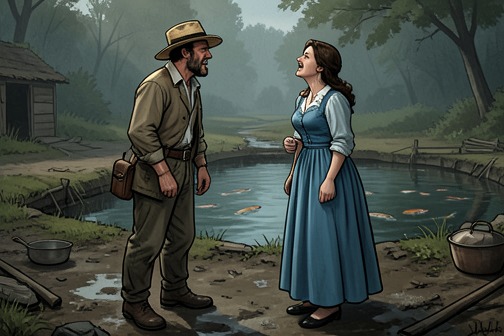
[Ajo Kawir and Iteung](entity:relation-recall-relation-ajo-kawir-iteung-b78e7e7b016f)’s wedding makes their commitment public while leaving one of [Ajo Kawir](entity:character-recall-character-ajo-kawir-b0a44f5ecf61)’s defining difficulties unchanged: the “Bird” remains asleep. Their marriage is celebrated by both families and friends, and the couple’s happiness does not depend on his body conforming to an expectation of sexual function. Instead, the wedding establishes a shared future through affection, forgiveness, and the practical decisions they make together.
## The Wedding and Its Guests
The ceremony took place a few months after Ajo Kawir’s twentieth birthday and a few days after [Iteung](entity:character-recall-character-iteung-2fd0aee6ad34) turned twenty. Both sets of parents were pleased, and [Iwan Angsa](entity:character-recall-character-iwan-angsa-2291d9126f72) and [Wa Sami](entity:character-recall-character-wa-sami-eb67b04951e2) were moved to see Ajo Kawir as a groom. [Gecko](entity:character-recall-character-gecko-f32ba8fd83d3) joined the gathering with a smile, helping welcome the guests. The celebration mattered not only to the couple: people who had watched them grow up and face danger were present to recognize their new life together.
[Good Budi](entity:character-recall-character-good-budi-f8380c625b52) also attended. He embraced Ajo Kawir, wished the couple well, and asked to be forgiven for something he had done earlier. Ajo Kawir accepted the apology, returned the embrace, and patted him on the shoulder. Their exchange brings an earlier conflict into the wedding without letting it define the day: the celebration makes room for forgiveness and mutual understanding as well as happiness.
## A Marriage That Does Not Depend on Recovery
The narration presents the couple as belonging to one another and as the happiest people there, beyond the reach of anyone who might try to spoil their wedding. That emphatic account of their union contrasts with the continuing silence of Ajo Kawir’s “Bird.” It has not awakened for the ceremony and remains asleep while the other guests celebrate. The wedding therefore does not resolve his impotence or treat recovery as the condition that makes marriage possible.
Instead, the account turns to Ajo Kawir’s fingers as a way of expressing intimacy between the newlyweds. When he asks whether Iteung has washed her hands and she says she has, their wedding night is described as pleasurable finger play. The scene keeps the focus on their mutual closeness without making the sleeping Bird the measure of whether their relationship can be fulfilling.
Ajo Kawir’s own view of his circumstances joins acknowledged limitation to expectation: he knows his penis cannot become hard, yet he has had a beautiful wedding and believes he can have a happy family. At twenty, after what he has suffered, he is described as having become a wise philosopher. The wedding does not erase hardship; it marks the possibility of family life alongside it.
## Their Shared Plans and the Unsettled Future
The couple’s immediate future is discussed in practical terms. Ajo Kawir says they will eventually need to leave the family home and find a place of their own. Iteung answers that they need not hurry: her parents are content to have them stay, and the couple do not have much money. Their exchange shows the marriage taking shape through shared decisions rather than through ceremony alone.
Iteung also links their hopes to the prospect of the Tiger appearing. If he does, she says, they will have enough money to buy a house and open a small store. The plan gives the wedding an unresolved edge: the couple imagine domestic independence, but part of that imagined future still depends on a dangerous confrontation and its possible financial reward. Their joy is complete in the moment, even as the means of securing what comes next remain unsettled.
## Narrative Significance
The wedding gathers reconciliation, bodily difference, and plans for an ordinary household into one turning point. Good Budi’s apology allows a past injury between men to be met with forgiveness; Ajo Kawir’s still-sleeping Bird shows that marriage has not cured his impotence; and the couple’s discussion of housing and money gives their happiness a concrete future to inhabit. Together, these details make the wedding more than a happy ending: it is a commitment to build a family and intimacy without waiting for Ajo Kawir’s body to change, while the possibility of conflict with the Tiger remains ahead.
Event 8
伊通告知阿乔自己怀孕
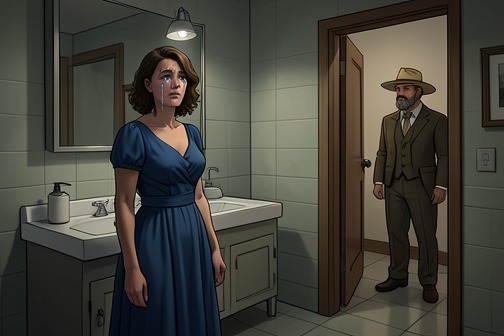
[Iteung’s pregnancy](entity:state-recall-state-iteung-s-pregnancy-59b1d23e9fb3) revelation is a domestic rupture that turns a private discovery into an immediate conflict between her and [Ajo Kawir](entity:character-recall-character-ajo-kawir-b0a44f5ecf61). She returns from the hospital in tears and tells him she is pregnant; he demands to know who the father is, calls her a whore, and leaves the house. The scene supplies no answer to his question, so its decisive effect is not disclosure of paternity but the sudden collapse of trust and the unresolved uncertainty that follows.
## The Morning Before the Revelation
Earlier that morning, Ajo Kawir sees [Iteung](entity:character-recall-character-iteung-2fd0aee6ad34) shivering and asks what is wrong. She does not reply. She gets out of bed and goes to the bathroom, where she vomits. He follows to check whether she is sick, then prepares warm water and tea, assuming she might want to bathe and rest. He stands beside the bed while she lies curled away from him. These gestures establish the everyday intimacy of their household, but they do not give him access to what she knows or is feeling. Before the revelation, concern takes the form of practical care; neither illness nor silence yet explains the change between them.
## The Hospital and the Disclosure
Later, in a light drizzle, Iteung hurries from the road toward the house. Ajo Kawir opens the door for her, and after she comes inside they stand looking at each other without speaking. Her hair, face, and clothes are damp, and her eyes fill with tears. Asked where she has been since leaving that morning, she says she has been at the hospital and begins to sob. Then she tells him she is pregnant. The account gives no further medical detail and does not identify the child’s father. The gap between her arrival and her explanation matters: the fact reaches Ajo Kawir only after the long silence of the encounter has made visible that something has changed.
## Accusation and Departure
Ajo Kawir responds by shouting at Iteung and demanding to know who the father is. She pushes past him, collapses onto the sofa, hides her face, and weeps; the account says that she tries to say something between sobs, but he cannot make it out. Her attempt to speak therefore does not resolve the question that drives his response. He calls her a whore, opens the door, and goes out into the drizzle, slamming it behind him. The sequence moves rapidly from a shared homecoming to an unanswered demand and separation. Iteung’s pregnancy is disclosed, but the circumstances Ajo Kawir wants to know remain inaccessible in this scene.
## Care, Dependence, and the Novel’s Contrasts
The surrounding narrative gives material care and economic vulnerability distinct, sometimes opposing meanings. [Wa Sami](entity:character-recall-character-wa-sami-eb67b04951e2) sends food to [Scarlet Blush](entity:character-recall-character-scarlet-blush-a9aca97da18b) through [Gecko](entity:character-recall-character-gecko-f32ba8fd83d3), instructing him to leave a sack outside her door without knocking or speaking to her. Ajo Kawir, recalling Scarlet Blush’s suffering, also offers his savings to a Young Widow who has been forced into sex by her landlord and his friends, suggesting that she use the money either to end her pregnancy or care for the child. By contrast, Mister Lebe offers the Young Widow rent-free housing in exchange for access to her room, then threatens to throw her and her children into the street when she resists his friends. These episodes do not explain Iteung’s pregnancy, and they should not be treated as evidence about its cause. They do, however, place her disclosure within a wider story where pregnancy, housing, money, and sexual power can become entangled, while care may be expressed through food, shelter, or cash.
## Narrative Consequences and Significance
The revelation’s immediate consequence is Ajo Kawir’s departure, not reconciliation or clarification. His question remains unanswered in the reported scene, and the narration does not establish what Iteung was trying to say as she wept. The disclosure thus functions as a turning point whose force rests on what it reveals and what it withholds: Iteung is pregnant, but the couple’s next response to that fact cannot be settled by the exchange. Elsewhere, the narrative shows how a pregnancy can expose a woman to dependence and rejection, while an act of giving can offer limited practical support. Against those episodes, Ajo Kawir’s response sharply narrows their shared moment to suspicion, accusation, and a slammed door.
Event 9
Ajo Kawir kills the Tiger

[Ajo Kawir](entity:character-recall-character-ajo-kawir-b0a44f5ecf61)’s killing of the Tiger does not end the danger surrounding the duel; it changes its form. The Tiger’s associates may seek revenge, while people who wanted the Tiger dead welcome Ajo Kawir’s action. The aftermath brings the novel’s conflicting measures of manhood into focus: the honor code that makes a challenge difficult to withdraw, the wish to protect a newly found happiness, and the possibility that survival may depend on accepting imprisonment.
## Causes and Stakes
Ajo Kawir’s decision to fight the Tiger carries consequences beyond the duel itself. [Gecko](entity:character-recall-character-gecko-f32ba8fd83d3) warns that the worst outcome would not simply be the Tiger killing him, but his being killed by someone else for having declared his intention to kill the Tiger. The warning makes clear that the challenge has exposed Ajo Kawir to a wider circle of danger, not only to the Tiger’s personal strength.
The stakes are intimate as well as physical. Ajo Kawir tells Gecko that if he dies, his relationship with [Iteung](entity:character-recall-character-iteung-2fd0aee6ad34) will be over, and he will no longer suffer over his inability to get an erection. His words connect the prospect of death to both love and the distress that has shaped his self-image. Gecko answers that he does not want Ajo Kawir to die, making their friendship a direct counterweight to the fatal logic of the challenge.
## The Challenge and Its Honor Code
After finding love and planning to marry Iteung, Ajo Kawir recognizes that he could withdraw from the fight and return the advance money he received from [Uncle Bunny](entity:character-recall-character-uncle-bunny-ad0f70570133). He sees a possible future with Iteung, even if his sexual dysfunction remains, and understands that the duel risks that happiness for no necessary purpose. The decision is therefore not presented as a simple desire to fight: he has a concrete alternative and knows what he stands to lose.
Yet Ajo Kawir tells Gecko that he is a man and cannot back out after challenging someone. He frames the conflict as a test of masculine honor, even while acknowledging that his sexual dysfunction makes that identity feel compromised. His self-mocking speculation that he might withdraw and run exposes the pressure within the code: retreat would preserve his chance at happiness, but in his own eyes it would make him a coward. The challenge operates as a spoken commitment whose consequences persist even after his circumstances change.
## The Killing and Its Aftermath
The evidence establishes that [Ajo Kawir kills the Tiger](entity:event-recall-event-ajo-kawir-kills-the-tig-d956bcf406ca), but also shows that the killing does not bring an uncomplicated victory. Later, Ajo Kawir warns that the Tiger’s associates will murder him in prison, while another speaker argues that prison can protect him: the jails are full of the speaker’s men, who will follow his instructions, and many people connected to the Tiger had themselves wanted the Tiger dead. On the street, those men might feel compelled to kill Ajo Kawir to restore their standing; in custody, their motives and opportunities change.
That proposed protection makes imprisonment part of the aftermath rather than a separate resolution to the danger. It also reveals that the Tiger’s authority had not secured the loyalty of everyone around him: his uncle, neighbors, and some of his own men wanted him dead, although they lacked the resolve to act. Ajo Kawir’s killing thus places him in danger from the Tiger’s remaining associates while winning him the tacit approval of people who had also wished for the Tiger’s death.
## Honor Beyond the Duel
The novel echoes Ajo Kawir’s dilemma in the story of [Gaptooth Mono](entity:character-recall-character-gaptooth-mono-bc0a31d7a63c), whose fight with the Beetle is imposed as a way to settle a dispute among truck drivers. Gaptooth Mono wants to be seen as a tough guy and associates that transformation with being able to return to his village without shame. Yet he tells Ajo Kawir to bet all his money on the Beetle, distinguishing his personal desire to become tough from an expectation that he must win for money.
The fighting arena is part of an underground gambling operation, and the evidence notes that two fighters had died after being badly injured where no clinic or hospital could provide timely help. Gaptooth Mono nevertheless insists that his own fight is not about money but about becoming a tough guy. His predicament throws Ajo Kawir’s challenge into relief: in both cases, a fight is shaped by a masculine ideal and by an audience or community that gives the ideal force. Ajo Kawir’s killing of the Tiger is therefore both an act with immediate political consequences and a test of how much authority the honor code retains once love and survival offer reasons to turn away from violence.
## Legacy of the Killing
Later, Gaptooth Mono asks Ajo Kawir for the secret of defeating the Beetle because he has heard that Ajo Kawir is a champion fighter and killed the Tiger. The killing has become a public credential, detachable from its personal cost and usable as a model for another man seeking toughness. Ajo Kawir’s reputation consequently outlives the duel: what began as a dangerous challenge becomes part of the story other fighters tell about him.
Event 10
Two police officers rape Scarlet Blush
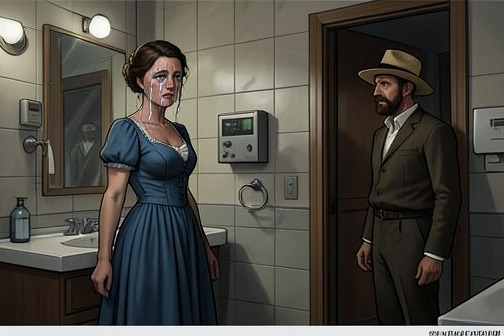
The rape of [Scarlet Blush](entity:character-recall-character-scarlet-blush-a9aca97da18b) by two police officers is a pivotal event in the novel’s retrospective explanation of [Ajo Kawir’s erectile dysfunction](entity:state-recall-state-ajo-kawir-s-erectile-dy-b4eb8de18618). Its significance lies not in a direct scene of the assault, but in the chain of losses and violence through which [Uncle Bunny](entity:character-recall-character-uncle-bunny-ad0f70570133) links [Agus Cornpipe’s death](entity:event-recall-event-d66c57b6e193), Scarlet Blush’s mental illness, the officers’ crime, and Ajo’s lasting trauma.
## Background and Causal Chain
The event is recounted as part of a conversation between [Ajo Kawir](entity:character-recall-character-ajo-kawir-b0a44f5ecf61) and Uncle Bunny. Uncle Bunny says that he wants to help Ajo because he considers himself, directly or indirectly, responsible for Ajo’s inability to get an erection. He constructs that responsibility through a sequence of missed protection and subsequent harm: if he had protected [Agus Cornpipe](entity:character-recall-character-agus-cornpipe-cb59db190e8c), Agus would not have died; if Agus had lived, Scarlet Blush would not have gone mentally ill; and, in that alternative chain, the two police officers would not have raped her.
This explanation places the assault downstream of Agus’s death and Scarlet Blush’s mental illness, but it is Uncle Bunny’s counterfactual account of responsibility, not an independently confirmed statement that he caused each event. Its repeated conditional logic makes the episode part of a broader argument about how violence can travel beyond its immediate victims, implicating people who were present later and those who believe they could have intervened earlier.
## Assault and Its Consequences
The officers’ rape is identified as the event that leads, in Uncle Bunny’s chain of reasoning, to Ajo and his companions being at [Scarlet Blush’s house](entity:location-recall-location-ba429b0a1b6d) that night. Ajo rejects the idea that this sequence explains his impotence, calling it coincidence and saying that the Bird had simply decided to go to sleep that night. The difference between the men’s accounts remains unresolved: Uncle Bunny reads a connection of responsibility, while Ajo resists turning the night into a causal explanation.
The assault is therefore consequential in two related ways. It is part of the history of violence surrounding Scarlet Blush, and it becomes linked to Ajo’s memory of the night he associates with the Bird’s disappearance. The evidence does not describe the assault itself in detail; its role in the narrative is conveyed through the characters’ later attempts to understand responsibility, trauma, and consequence.
## Remembrance and Narrative Significance
The event returns in a later recollection shared by Ajo and [Gecko](entity:character-recall-character-gecko-f32ba8fd83d3). As Ajo studies the photograph of his daughter, Gecko remembers their past and a hellish night at Scarlet Blush’s house that he still regrets. This juxtaposition connects the episode to both men’s memories without changing the account into a fully narrated flashback: the night is evoked as a source of regret, while the assault remains part of the earlier history that Uncle Bunny has described.
By allowing the event to emerge through retrospective explanation and regret, the novel makes its effects more prominent than its immediate depiction. Uncle Bunny’s account assigns a chain of responsibility; Ajo’s reply questions that chain; and Gecko’s later remembrance confirms that the night continues to weigh on him. The assault thus stands within a wider pattern in which acts of violence generate consequences that persist in memory and shape how the characters interpret their lives.
Event 11
Iteung takes revenge on Mr. Toto
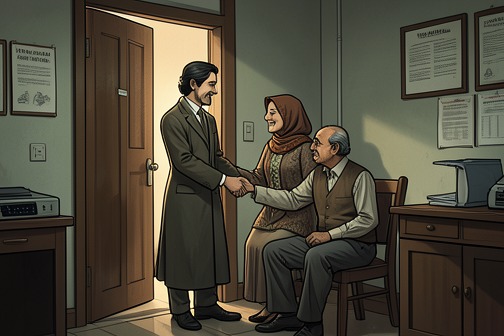
[Iteung takes revenge on Mr. Toto](entity:event-recall-event-iteung-mr-toto-3bf58d10758d) in a calculated reversal at the Guidance Office, where the teacher once held authority over her. She approaches him as though returning to a familiar relationship, then attacks him when he believes he can resume control. By leaving him exposed in the schoolyard, she makes the private encounter public and turns his position of authority into humiliation. The episode’s central movement is from apparent reunion to retaliation, with [Iteung](entity:character-recall-character-iteung-2fd0aee6ad34) directing both the encounter and its aftermath.
## Return to the Guidance Office
The scene begins with Iteung standing at the Guidance Office door. Mr. Toto is surprised to see her and asks where she has been since changing schools; he remarks that she has grown up. His questions frame the meeting as a return to an earlier familiarity. Iteung smiles shyly, enters, and closes the door, while Mr. Toto asks whether she misses him. He says that he does.
Iteung sits beside him, takes his hand, and rests her head on his shoulder. Mr. Toto responds by putting an arm around her. He reads her gestures as encouragement and allows the encounter to proceed on that assumption. The narration makes clear that he misunderstands what is happening: Iteung’s apparent closeness is the means by which she brings him within reach, not evidence that their former relationship has been restored.
## The Reversal
As Mr. Toto moves toward her, Iteung acts first. She kicks him and follows with further blows, leaving him unable to escape and unconscious beside the chair. The reversal is abrupt: the man who had taken her return as an invitation discovers that she has set the terms of the encounter and will not let him control it. The scene establishes her response through action rather than an explanation of her intentions.
When Mr. Toto is down, Iteung calmly gathers her own clothes, collects his as well, and leaves the office. Her composure contrasts with the violence of the attack and with Mr. Toto’s confusion. She does not remain to negotiate or explain herself. Instead, she takes charge of what happens next, carrying away the clothing that will allow her to expose him beyond the closed room.
## Exposure and Aftermath
Near the school gate, Iteung throws Mr. Toto’s clothes into an old asphalt drum used for burning rubbish. Schoolchildren are leaving class in groups when a teacher comes out of the Guidance Office naked and disoriented. They stop, point, and shout; some are frightened, while others laugh at the unexpected sight. Mr. Toto covers his eyes, apparently unable to face the crowd or the world around him. The public scene is the consequence of Iteung’s decision to take his clothes and discard them: his authority as a teacher is replaced, in front of his pupils, by exposure and helplessness.
The episode closes not with a confrontation between the two characters but with Iteung alone in the bathroom, thinking about Mr. Toto. That ending keeps the aftermath complex: her retaliation has left him publicly humiliated, yet her thoughts turn back to him with desire. The text therefore distinguishes the attack from a simple repudiation of attraction. Her revenge is directed at Mr. Toto and enacted through control of the encounter, while the ending leaves her continuing bodily response unresolved rather than presenting it as a reconciliation.
## Retribution and Control
The scene’s structure depends on a sharp gap between what Mr. Toto believes and what Iteung is doing. He interprets her return and gestures as signs of renewed intimacy; she uses that misreading to make the encounter possible on her terms. The school setting then extends the reversal beyond the office: what begins behind a closed door becomes a spectacle witnessed by students. Iteung’s choice to remove and burn the clothing makes exposure part of the retaliation, not an accidental consequence.
Elsewhere, the novel repeatedly places acts of violence beside claims about fairness, protection, and revenge. [Ajo Kawir](entity:character-recall-character-ajo-kawir-b0a44f5ecf61) argues that an unfair world should be made fairer; he threatens Mister Lebe to keep him from harming the Young Widow again; and he later tells the girl that he is prepared to die fighting the Tiger because he loves her. Those episodes provide a broader context for retaliation as a way characters try to answer injury, although they do not explain Iteung’s motive in this particular scene. In a separate exchange, Ajo Kawir rejects [Uncle Bunny](entity:character-recall-character-uncle-bunny-ad0f70570133)’s attempt to connect his impotence to a chain of events involving [Agus Cornpipe](entity:character-recall-character-agus-cornpipe-cb59db190e8c), [Scarlet Blush](entity:character-recall-character-scarlet-blush-a9aca97da18b), and the police, calling it coincidence. Together, these different accounts of responsibility and reprisal make Iteung’s episode part of a wider pattern in which characters contest who has the power to define an injury and what can count as an answer to it.
Event 12
Iteung learns to fight at Kalimasada
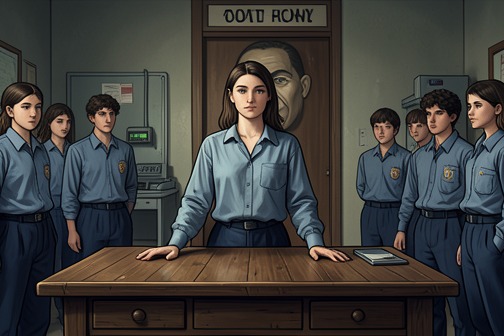
[Iteung](entity:character-recall-character-iteung-2fd0aee6ad34) learns to fight at the [Kalimasada Silat Academy](entity:organization-recall-organization-kalimasada-silat-a71a93797ad7) after explicitly asking for instruction that will let her protect herself. The episode makes her training more than a display of toughness: it begins with her naming a need, continues through punishing discipline, and culminates in a public bout that changes how her ability is judged. Her resolve is formed in a setting where fighting is taught as a practical skill, a source of courage, and a way to establish standing among others.
## Choosing to Learn
When asked what class she wanted, Iteung rejected the suggestion of academic tutoring and said she wanted to learn how to fight. At the academy’s enrollment table, she gave her name assertively and, asked why she wanted training, answered that she wanted to protect herself. The choice is direct: she identifies a vulnerability and seeks a skill she can use in response, rather than treating self-protection as someone else’s responsibility.
The academy itself has a history that complicates the meaning of that choice. Its founder, Kyai Abdul Kadir, had been a commander in the twelve-year civil war between the republican army and Islamic rebels. After the rebels’ defeat, some former guerrillas joined his school, an effort intended to offer them an alternative to association with soldiers who might later turn against them. Under his son, however, the religious instruction and practical lessons in sewing, farming, and managing loans disappeared. The school became a martial arts academy whose students came to learn how to fight effectively and to discover what courage felt like. Iteung enters this changed institution for a purpose grounded in protection, within a place increasingly defined by combat and courage.
## Discipline and Training
Iteung’s progress is presented through exertion before it is demonstrated in a fight. While running around the edge of the soccer field, she continues after most of the others have stopped. She has already completed more than fifty circuits and has set herself a goal of seventy. Her legs are tired, but she insists on completing the planned distance rather than stopping or walking. The teacher watching her calls her frightening; the description makes her willpower, not merely physical ability, the first evidence of what she brings to training.
That self-command carries into her sparring. Iteung challenges [Good Budi](entity:character-recall-character-good-budi-f8380c625b52) for not fighting in earnest and refuses to accept the idea that she has lost before she collapses and cannot get up. The exchange places her in a setting where courage is tested in public and where persistence matters even when she is taking hits. Her determination does not mean she is untouched by the contest: the other students witness Good Budi landing most of his attacks, and Iteung’s face is visibly bruised. The scene establishes both the cost of the test and her refusal to let that cost decide its outcome.
## The Bout with Good Budi
Good Budi initially gains the upper hand and assumes that Iteung is already spent. That assumption briefly lowers his guard. Iteung uses the opening to kick him in the nose, knock him down, and get on top of him; she then strikes him until he loses consciousness. The reversal is sudden, but it grows from the qualities already established in her training: persistence, readiness to continue, and the ability to act when an opponent underestimates her.
The fight takes place in a large field behind the academy, with their friends standing in a circle to watch. It is therefore not only a private measure of competence. Good Budi’s defeat is witnessed by the group, and the teacher again calls Iteung frightening before ordering others to tend to both students. Good Budi later tells her that in very little time she has become more of an ace than he is. His admission confirms a shift in their relative standing: the girl he had attacked and presumed exhausted is recognized by her defeated opponent as the more accomplished fighter.
## Significance and Wider Context
The episode distinguishes learning to fight from a simple appetite for violence. Iteung’s stated reason is protective, while the academy’s broader appeal includes the wish to fight effectively and to feel courageous. Her training gives that abstract aim a concrete form: repeated laps, a set target, an opponent, witnesses, and a result that overturns expectation. The skill she seeks becomes legible through practice and through recognition by others.
The story’s surrounding world also shows that violence takes forms far beyond a training bout. The [Empty Hand](entity:character-recall-character-empty-hand-12a3ce1cc250) is described as a group whose members may be paid to kill and who are skilled with weapons; at the [Rubber Plantation Fighting Pit](entity:location-recall-location-4133637f8189), soldiers organize fights for spectators and gambling, sometimes bringing in people from military operations. Against those forms of violence, the academy’s training has a distinct immediate purpose in Iteung’s account: she wants the ability to protect herself. The contrast does not make combat harmless, as her sparring shows, but it clarifies why she chooses to enter the academy and why her persistence there matters.
Event 13
Ajo Kawir discovers Jelita after the chase
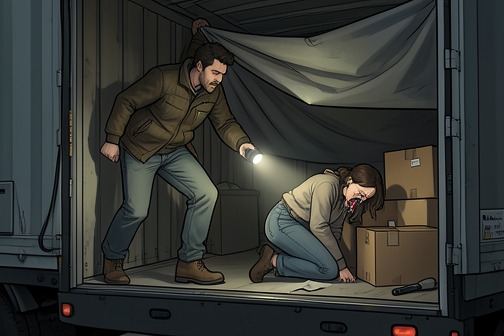
[Ajo Kawir discovers Jelita after the chase](entity:event-recall-event-ajo-kawir-jelita-d86a55f46c01) when a perilous truck pursuit gives way to an even more unsettling discovery: a woman is hidden beneath the tarp in the trailer, among the cargo. The encounter introduces [Jelita](entity:character-recall-character-jelita-ed2413cdb705) into [Ajo Kawir](entity:character-recall-character-ajo-kawir-b0a44f5ecf61)’s story through surprise and foreboding rather than deliberate search.
## The Chase’s Immediate Aftermath
The chase ends with the Beetle’s truck losing control. Its wheels skid off the road and into a ditch; the vehicle then slams into the piling of a small bridge, dislodging it and dragging it several meters before stopping with its wheels suspended and still spinning. Ajo Kawir and his companion pull over to calm down. Near dawn, they get out to smoke: Ajo Kawir inspects the damage, while the exhausted young man leans against an overpass wall.
## The Discovery in the Trailer
A sound of retching comes from inside the trailer. Ajo Kawir takes a flashlight, climbs into the hold, and pulls back the tarp. Among the things they are hauling, they find a crouched woman vomiting, perhaps shaken by the young man’s reckless driving. She has not been introduced through conversation or an announced arrival; the physical jolt of the ride has made her presence known.
## Foreboding and Significance
Ajo Kawir immediately senses that the discovery brings trouble. He mutters, “We’ve got a big problem,” then stresses that it is “a really big problem.” The narration names the woman as Jelita and marks this moment as how the two meet. The sequence pivots from the danger of the road to the consequences of an unexpected passenger: the chase has not merely ended in damaged vehicles but opened a new connection in Ajo Kawir’s story.
Event 14
Gaptooth Mono and Beetle's ring fight
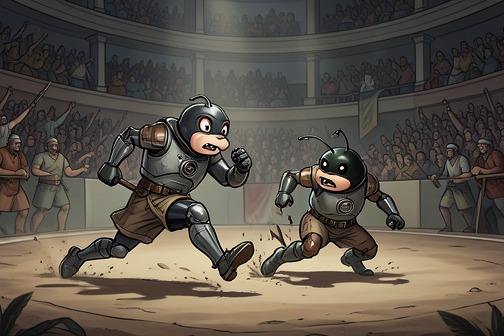
[Gaptooth Mono and Beetle's ring fight](entity:event-recall-event-gaptooth-mono-beetle-c6ee091a1536) is an underdog contest whose outcome reverses after [Gaptooth Mono](entity:character-recall-character-gaptooth-mono-bc0a31d7a63c) is badly injured. [The Beetle](entity:character-recall-character-the-beetle-d390d01605cd) appears to have control, but Gaptooth Mono survives by conserving his strength and seizing a narrow opening; his victory is followed by urgent concern for the defeated fighter and a hospital visit from [Ajo Kawir](entity:character-recall-character-ajo-kawir-b0a44f5ecf61), who brings both Gaptooth Mono’s earnings and the proceeds of a bet.
## Contest and Stakes
The fight is framed as a public spectacle. Before it begins, Gaptooth Mono faces three men with an unusually calm demeanor, removes his shirt, and throws it onto the grass. Under gas and oil lamps, spectators can see the large tattoos on his chest and back. His composure and visible tattoos establish the intensity of the confrontation without determining its result.
At a later point in the contest, Gaptooth Mono manages to break away and runs around the arena’s perimeter, with the Beetle pursuing him. The brief escape does not end the fight: the Beetle closes in, and the advantage shifts sharply when he targets Gaptooth Mono’s knee. Gaptooth Mono cannot evade the blow, and his right leg is left unusable.
## Injury and Reversal
With Gaptooth Mono down, the Beetle continues the assault. The severity of the injury makes the contest appear nearly decided, but Gaptooth Mono has preserved some energy from the beginning of the fight. Even though his eyes are almost swollen shut and he cannot move his ruined right leg, he does not spend that remaining strength until a small opportunity appears.
He wriggles his torso and pushes the Beetle off balance. That moment allows him to kick the Beetle in the chin with his left leg. Rather than a straightforward recovery, the reversal depends on a limited resource: Gaptooth Mono cannot regain the use of his injured leg, so he turns to the strength and movement still available to him.
Gaptooth Mono then holds on to the Beetle, rises, and brings him down with his body weight. The Beetle remains motionless for a long time before managing to pat the ground three times, signaling surrender. The result is a decisive win for Gaptooth Mono, achieved only after the fight has seemed to leave him unable to continue.
## Aftermath and Significance
Victory does not make the consequences of the fight trivial. The Beetle may die unless he reaches a hospital immediately, and the hospital is fifty-five kilometers away. The urgency of getting medical care places a stark limit on the triumph: the match has ended, but its participants remain subject to its serious consequences.
Later, Ajo Kawir visits Gaptooth Mono at the hospital. He places a brown paper envelope containing the earnings Gaptooth Mono had asked him to keep on the small table beside the bed, and sets down a second, fatter envelope with money from the bet Gaptooth Mono won at the rubber plantation. Gaptooth Mono admits that he disregarded Ajo Kawir’s instruction and bet all of Ajo Kawir’s money on his victory. The exchange links the ring outcome to trust, risk, and material reward: the fight has produced winnings, but the money arrives while Gaptooth Mono is recovering in a hospital bed.
Event 15
Ajo Kawir and Jelita's first sexual encounter and her departure
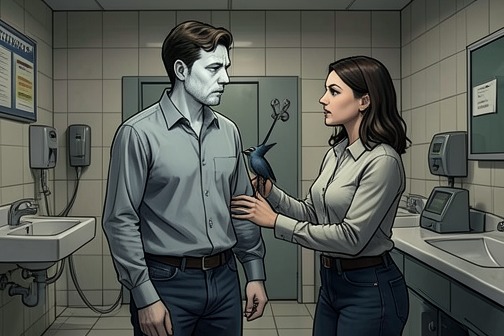
[Ajo Kawir and Jelita's first sexual encounter and her departure](entity:event-recall-event-ajo-kawir-jelita-0df14036b738) mark a brief but decisive turn in Ajo’s life: for the first time, he has sex, and the Bird he had thought incapable of rising becomes erect. The encounter unfolds in a gas-station bathroom, outside the settings he had imagined intimacy required. Its immediate aftermath is defined by absence: Ajo searches for [Jelita](entity:character-recall-character-jelita-ed2413cdb705), but she has gone, and does not come back.
## The encounter at the gas station
At the next gas station, Ajo goes into the men’s bathroom. Before he can close the door, Jelita pushes her way inside, then closes and locks it. The small, enclosed space becomes the setting for a moment Ajo cannot readily understand. He is pale and disoriented as Jelita approaches and kisses him; he wonders whether what is happening might be a dream.
Jelita initiates the sexual encounter. When she undoes Ajo’s jeans, he sees the Bird stand erect, large and pointing upward. The sight astonishes him: he has never seen it like this before. His bodily response makes the event more than a sexual first; it interrupts the condition that has shaped his understanding of himself.
## A first experience and a changed understanding
Ajo later recognizes the encounter as his first time having sex. He has not previously known the pleasure of making love, and the cramped bathroom does not diminish the experience. He recalls Jelita leaning against the wall as he pressed against her, and at other moments sitting on the edge of the water trough with her legs wrapped around him.
The setting overturns his assumptions about what intimacy requires. A marital bed, hotel room, or bamboo mat on white sand is unnecessary: even a tiny gas-station bathroom can suffice. Ajo comes out happy, though awkward, and still unsure how to reconcile the experience with the possibility that it was a dream. He concludes that it was real. The contrast between his uncertainty and his physical discovery gives the scene its force: what had seemed impossible to him has happened in an ordinary, confined place.
## Jelita’s departure
After leaving the bathroom, Ajo looks for Jelita. He walks to his parked truck and opens the cabin door, but she is not there. He calls her name and scans the gas station, looking beyond the attendant and the people passing by. When he still cannot find her, his unease grows; he even goes into the women’s bathroom to check.
Ajo asks the attendant whether the woman who had been with him has been seen. The attendant says that Jelita was seen earlier, sitting with Ajo when he got gas, but has not been seen since. Ajo rushes outside to search near a food stall and convenience store. Returning to the truck, he discovers that Jelita’s small suitcase—and all her belongings—are gone. Her absence is not a delayed return within the scene: she has taken her things and left.
## The unresolved aftermath
Ajo waits at the gas station until nightfall, spends the night in the nearest town, and returns to the pump the following morning. He waits through the day, but Jelita does not appear again. The sequence ends without an explanation of her departure or a reunion. The happiness and bodily change of the encounter therefore remain bound to a sudden loss: Ajo discovers a new possibility in himself just before discovering that Jelita is no longer there.
Event 16
Iteung kills Good Budi
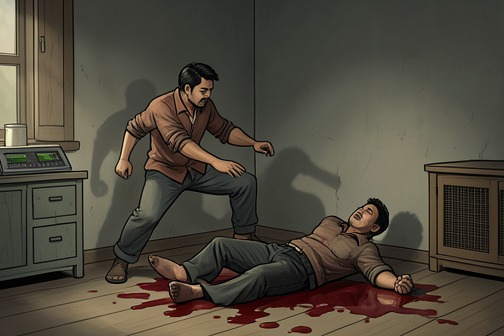
[Iteung](entity:character-recall-character-iteung-2fd0aee6ad34)’s killing of [Good Budi](entity:character-recall-character-good-budi-f8380c625b52) is a return to an earlier violence and a decisive act of revenge. After finding him at an empty house, she answers his claim on her and her child with a lethal attack, then reports herself to the police rather than fleeing. The scene ends not with escape or denial but with Iteung’s voluntary surrender, and she later maintains that she does not regret what she did.
## Background and Encounter
Good Budi is guarding an empty house once owned by an ex-government official when Iteung appears inside. He does not know how she entered. His greeting is familiar and possessive, and he immediately asks whose child she is carrying, suggesting that it might be his or belong to [Ajo Kawir](entity:character-recall-character-ajo-kawir-b0a44f5ecf61), whom he insults. Iteung answers plainly that the child is not his.
## The Killing
Iteung recognizes that Good Budi has gone soft and is no longer difficult for her to overpower. She beats him, then prevents him from escaping by throwing him into a corner and continuing the attack. She pulls him by the hair and slams his head against the wall; afterward, he lies still and blood spreads across the floor. The reversal is stark: Good Budi’s question attempts to reassert an old claim, but Iteung controls the encounter and determines its outcome.
## Surrender and Aftermath
Iteung leaves the house and approaches a policeman at a security post with her hands covered in blood. She tells him that she has killed someone and holds out her wrists to be handcuffed. The policeman freezes before fumbling for his cuffs; Iteung does not resist being taken into custody. Her actions make the killing an acknowledged crime rather than a concealed one.
After spending years in prison, Iteung says that she feels amazing to be released and does not regret killing Good Budi, even though the act cost her years in a cell. Her response preserves the moral force of the event in her own terms: imprisonment is its consequence, but it has not changed her judgment of the killing.
## Prior Context and Narrative Recurrence
Iteung’s killing of Good Budi belongs to a history in which violence is not confined to a single encounter. Earlier, Iteung had entered the [Kalimasada Silat Academy](entity:organization-recall-organization-kalimasada-silat-a71a93797ad7) to learn how to fight. The academy had been founded by Kyai Abdul Kadir, a veteran of the twelve-year civil war between the republican army and Islamic rebels, as an effort to give former child guerrillas martial instruction, religious teaching, and practical means of earning a living. After his death, his son removed the religious classes and the instruction in skills such as sewing, cultivation, and managing loans; the school became an ordinary fighting academy, attended by people seeking effectiveness and courage. That history places Iteung’s acquired capacity within an institution whose original rehabilitative purpose had narrowed, against a wider landscape where soldiers used former fighters and sometimes turned on them.
The book also shows violence returning through memory and silence. When Ajo Kawir was asked how his impotence began, [Gecko](entity:character-recall-character-gecko-f32ba8fd83d3) concealed the fact that two policemen had raped [Scarlet Blush](entity:character-recall-character-scarlet-blush-a9aca97da18b), saying that they did not know what had happened. Later, after leaving Iteung, Ajo Kawir sat on a night bus and heard again in his mind the sound of the Tiger’s skull cracking under a wooden crutch, mingled with Iteung’s sobs. Those earlier episodes do not explain the immediate mechanics of Good Budi’s death, but they establish a recurring pattern: violent acts persist in what characters cannot or will not say, and in the memories that return after a confrontation has ended.
Good Budi’s death also reverses his former position in Iteung’s life. He had once been involved in the coercive violence that shaped her history; when he meets her again, he speaks as though her pregnancy might give him a claim over her child. Iteung rejects that claim, identifies his weakness, and kills him. She subsequently accepts the legal consequence, spending years in prison, but later says she does not regret the killing. The event therefore connects personal revenge to the book’s broader recurrence of violence, while distinguishing Iteung’s deliberate surrender from the concealment and disputed accounts surrounding other deaths.
## Prior Context and Narrative Recurrence
Iteung’s killing of Good Budi belongs to a history in which violence is not confined to a single encounter. Earlier, Iteung had entered the Kalimasada Silat Academy to learn how to fight. The academy had been founded by Kyai Abdul Kadir, a veteran of the twelve-year civil war between the republican army and Islamic rebels, as an effort to give former child guerrillas martial instruction, religious teaching, and practical means of earning a living. After his death, his son removed the religious classes and the instruction in skills such as sewing, cultivation, and managing loans; the school became an ordinary fighting academy, attended by people seeking effectiveness and courage. That history places Iteung’s acquired capacity within an institution whose original rehabilitative purpose had narrowed, against a wider landscape where soldiers used former fighters and sometimes turned on them.
The book also shows violence returning through memory and silence. When Ajo Kawir was asked how his impotence began, Gecko concealed the fact that two policemen had raped Scarlet Blush, saying that they did not know what had happened. Later, after leaving Iteung, Ajo Kawir sat on a night bus and heard again in his mind the sound of the Tiger’s skull cracking under a wooden crutch, mingled with Iteung’s sobs. Those earlier episodes do not explain the immediate mechanics of Good Budi’s death, but they establish a recurring pattern: violent acts persist in what characters cannot or will not say, and in the memories that return after a confrontation has ended.
Good Budi’s death also reverses his former position in Iteung’s life. He had once been involved in the coercive violence that shaped her history; when he meets her again, he speaks as though her pregnancy might give him a claim over her child. Iteung rejects that claim, identifies his weakness, and kills him. She subsequently accepts the legal consequence, spending years in prison, but later says she does not regret the killing. The event therefore connects personal revenge to the book’s broader recurrence of violence, while distinguishing Iteung’s deliberate surrender from the concealment and disputed accounts surrounding other deaths.
## Historical and Narrative Context
Iteung’s killing of Good Budi takes place against a background in which fighting is both an acquired skill and part of a wider system of political violence. The Kalimasada Silat Academy was founded by Kyai Abdul Kadir, a veteran of the twelve-year civil war between the republican army and Islamic rebels. He established it to gather former guerrillas, many of whom had joined as children, and offer not only self-defense and religious instruction but practical ways to earn a living. After his death, his son dropped the religious classes and the lessons in sewing, cultivation, and managing loans. The academy became a conventional martial-arts school for students seeking to fight effectively and discover courage. The change from rehabilitation to combat training provides context for Iteung’s capacity without, by itself, explaining her decision to kill Good Budi.
The surrounding order also blurs the line between military force and criminal violence. Some former guerrillas became robbers or market extortionists, while soldiers who had once fought them could provide armed protection, use their manpower to maintain or disrupt the peace, and eventually turn against them. Soldiers also organized human fights at an arena, bringing combatants from places where military operations were underway. This account places individual violence in a landscape where force is organized, exploited, and repeatedly made public; Iteung’s later acceptance of arrest distinguishes her response from a system that treats former fighters as expendable.
The novel links violence to both silence and involuntary memory. When [Iwan Angsa](entity:character-recall-character-iwan-angsa-2291d9126f72) asked how [Ajo Kawir’s impotence](entity:state-recall-state-ajo-kawir-s-impotence-2cc1539eb633) began, Gecko concealed the rape of Scarlet Blush by two policemen and insisted that they did not know what had happened. Later, after leaving Iteung, Ajo Kawir sat on a night bus and heard in his mind the sound of the Tiger’s skull breaking under a wooden crutch, overlapping with his wife’s sobs. These episodes do not establish the circumstances of Good Budi’s death, but they show how violence persists beyond its immediate scene: it can be withheld from speech or return in memory. Against that pattern, Iteung’s direct admission to the policeman and her later refusal to regret the killing make her response unusually explicit, even as the years she spends in prison remain its lasting consequence.
Event 17
Iteung替Ajo Kawir向两名警察复仇
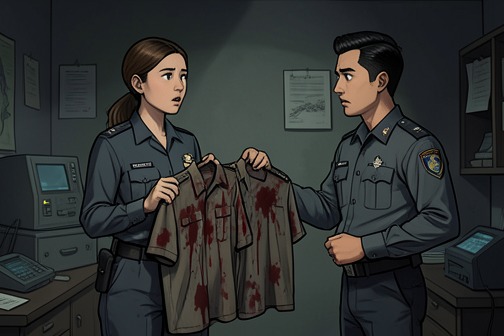
[Iteung](entity:character-recall-character-iteung-2fd0aee6ad34)’s revenge against the two police officers turns [Uncle Bunny](entity:character-recall-character-uncle-bunny-ad0f70570133)’s proposed cure for [Ajo Kawir](entity:character-recall-character-ajo-kawir-b0a44f5ecf61) into an act Ajo himself has refused to commit. Uncle Bunny believes that only Ajo can exact the revenge connected to his lost potency; Iteung instead kills the officers on her husband’s behalf. When she finally returns to Ajo and their daughter, she tells him what she has done. The killings restore neither Ajo’s former appetite for violence nor a simple moral order, but the following morning he discovers that his Bird has awakened.
## Causes and Background
The revenge is rooted in an earlier chain of events that Uncle Bunny presents as his responsibility. He argues that if he had protected [Agus Cornpipe](entity:character-recall-character-agus-cornpipe-cb59db190e8c), Agus would not have died; [Scarlet Blush](entity:character-recall-character-scarlet-blush-a9aca97da18b) would not have lost her sanity; the two police officers would not have assaulted her; and Ajo and [Gecko](entity:character-recall-character-gecko-f32ba8fd83d3) would not have been at her house that night. In Uncle Bunny’s account, that night is connected to Ajo’s erectile dysfunction. Ajo rejects the chain as coincidence and disputes the idea that the event can be assigned a single cause. Their disagreement leaves the past unresolved: Uncle Bunny treats the officers’ deaths as a possible answer to Ajo’s injury, while Ajo no longer wants to kill or fight.
Uncle Bunny has found the two officers and gives Iteung their photographs. He tells her that Ajo knows of the discovery but has changed through prison and the influence of the Bird: he does not want to kill the men, or anyone else. Uncle Bunny could arrange for someone else to kill them, but says that would miss the point. In his view, Ajo himself must take revenge, and that act might make his Bird rise again. Even while admitting uncertainty about the promised physical result, Uncle Bunny presents revenge as necessary for Ajo’s happiness and for his own peace of mind.
## The Choice to Act
Iteung asks Uncle Bunny why he will not kill the officers himself. He answers that he could have them killed, but insists that Ajo is the person who should hold the grudge and carry out the act. He therefore asks Iteung to convince her husband. She replies that Ajo has chosen a peaceful path, identifying the obstacle plainly: Uncle Bunny’s plan depends on restoring a past version of Ajo, whereas the man she knows now refuses that role.
The account does not show Iteung persuading Ajo or receiving his consent. Instead, after the story has established his refusal, it moves to her own action. This distinction matters: Uncle Bunny frames the killings as a remedy for Ajo, but Iteung becomes the agent of the revenge, making the decision that Ajo has declined to make. Her choice answers Uncle Bunny’s request in one sense while bypassing its central demand that Ajo personally kill the men.
## The Killings
The account connects Iteung’s actions to the officers’ earlier assault on Scarlet Blush. One of the men, [Scarface](entity:character-recall-character-scarface-7ab5e75a2758), recognizes too late that the woman confronting him knows about his past. Iteung tells him that she must kill him for her husband’s sake, then explains that Ajo ought to take revenge but will not dirty his hands with the man’s blood, so she is taking revenge for him. The passage presents her motive directly: this is retaliation undertaken in Ajo’s name, not an action attributed to Ajo himself.
Iteung kills Scarface, and the [Clove Smoker](entity:character-recall-character-clove-smoker-88f04a5664c8) is also found dead, his death attributed to her. A gardener reports seeing a woman enter and hearing her say that she has just been released from prison for killing someone and does not mind returning for killing him. The report makes the risk of her choice explicit: she knows that another killing could send her back to prison, yet does not treat that possibility as a reason to stop. The two deaths complete the revenge, but the available account does not show Ajo carrying it out or approving it beforehand.
## Return and Consequences
After the killings, Ajo and Iteung are together again, sitting cross-legged on a bed and facing one another. Iteung weeps and says that he has come back; he confirms that he has. The reunion is tender, but it does not conceal what has happened. When they realize that the police are at the door, their daughter begs her mother not to leave again. Iteung tells the child to be patient because her father is now there with her. Asked what happened, she tells Ajo that she killed the two police officers, whom she describes as his old friends. His angry response makes clear that the revelation is not presented as an uncomplicated shared victory.
The next morning, Ajo wakes to the empty space beside him, where Iteung should be, and realizes that he has an erection. He looks at the Bird in wonder, then touches it and finds it growing hard. The sequence places this return of function immediately after Iteung’s confession, but it does not establish that her killings medically caused it or that Ajo’s refusal has ended. Uncle Bunny had predicted that revenge might awaken the Bird; the narrative gives the reader the awakening while preserving the difference between his theory and the events it follows.
## Significance
The episode turns revenge into a contested act of substitution. Uncle Bunny treats violence as an instrument that might repair Ajo’s happiness, and Iteung performs the violence he believes Ajo must perform. Yet Ajo’s return to his family and his stated choice of peace prevent the killings from reading simply as his own recovery or triumph. Iteung’s decision has its own cost and agency: she acts for her husband, but the story does not erase that she, rather than he, chooses to kill.
The ending binds bodily change to a moral and relational complication rather than to a neat resolution. Ajo’s Bird awakens after the deaths, echoing Uncle Bunny’s hope, but the act that precedes that change is not Ajo’s revenge. He has returned to Iteung and their child; she has returned having killed the officers and facing the possibility of renewed imprisonment. The event therefore leaves peace and violence in the same household, with the physical consequence arriving only after Ajo’s refusal has been overridden by someone acting in his name.
Event 18
Ajo Kawir回家与女儿团聚

[Ajo Kawir](entity:character-recall-character-ajo-kawir-b0a44f5ecf61)’s return home culminates in a reunion with his daughter and [Iteung](entity:character-recall-character-iteung-2fd0aee6ad34), turning a journey marked by doubt into a tentative commitment to family life. But the homecoming is not a simple restoration: Iteung has killed two policemen, and the morning after their reunion Ajo Kawir discovers that his Bird has awakened again. The event brings belonging, unresolved violence, and bodily change together at the close of his journey.
## The Road Home
Driving alone in an empty truck, Ajo Kawir feels unsettled by the unfamiliar route to the small town where his story began. The truck carries no goods, and, unlike other times when he has driven it alone, its emptiness does not distress him. Instead, questions about whether he wants to see his wife and daughter, and whether he dares to go home at all, crowd his thoughts. The journey is therefore more than a change of location: it places the prospect of reunion against his fear of what returning will require.
On a deserted road bordered by teak forest, Ajo Kawir stops, drinks water, and sits quietly as vehicles pass. He then addresses the Bird, saying that he does not know whether it will ever rise again and that he no longer cares about that uncertainty. What matters now, he tells it, is going home to see Iteung, who is being released from prison that day, and raising their daughter together. His words make the journey’s purpose explicit: he is choosing family life without waiting for his own physical condition to be resolved.
## Meeting His Daughter
At last Ajo Kawir sees his daughter. Her darkish skin, oval face, shining eyes, and straight black hair remind him of Iteung. Until this encounter, he has kept photographs of the child, one after another, on the ceiling of his truck cabin; seeing her in person turns that repeated image into a relationship he must begin face to face.
The girl initially stands looking at him as if trying to work out who he is. Ajo Kawir identifies himself as her father. She is surprised, then runs to embrace him and weeps; he returns the embrace and strokes her hair. She whispers that he is Daddy. The change is immediate but not effortless: the child’s first look registers the distance between them, and her recognition and affection begin to bridge it.
Still sitting with Ajo Kawir, the girl asks where her mother is, recalling that her grandmother had said Iteung would come home that day. Ajo Kawir answers that Iteung may first have to take care of some business and assures her that he believes she will come. Her grandparents smile. The child’s question keeps the reunion open rather than complete: Ajo Kawir has arrived, but the family’s gathering still depends on Iteung’s return.
## Reunion with Iteung
A knock at the door precedes the scene between the spouses. Iteung and Ajo Kawir sit cross-legged on the bed facing one another, and Iteung weeps. Ajo Kawir takes her hand. Her first words acknowledge the fact of his return; he confirms that he has come back. Their reunion is rendered through small, direct gestures rather than a long explanation: they face one another, she cries, and he reaches for her hand.
Iteung says she wants to be with him regardless of whether he forgives her, and tells him that she loves him. Ajo Kawir answers that he loves her too and says he will stay and live with her. He proposes that they care for their child together, calling the girl beautiful like Iteung. His promise gives the journey a concrete destination: not merely seeing his wife and daughter, but remaining with them and sharing responsibility for the child.
## Violence and the Unfinished Return
The family’s future remains entangled with violence. When Ajo Kawir asks what happened, Iteung tells him that she killed two policemen, identifying them as his former friends. He reacts with an angry exclamation, sharply interrupting the tenderness of their exchange. The disclosure means that her release from prison does not bring a settled life; a new killing has occurred, and her words place that act directly within the couple’s shared past and present.
The next morning, Ajo Kawir wakes and sees that the space beside him is empty. He expects Iteung to be there, then notices that he has an erection. In astonishment, he checks and realizes that the Bird has become erect. This final reversal echoes the uncertainty he voiced on the road: he had told the Bird he would go home whether or not it ever awakened, but it does so after he has returned and reunited with Iteung. The ending does not explain what this change will mean for the family. It closes instead on the unexpected concurrence of a chosen homecoming and a bodily change Ajo Kawir had ceased to make a condition of his return.
Event 19
Ajo Kawir恢复勃起
[Ajo Kawir](entity:character-recall-character-ajo-kawir-b0a44f5ecf61)’s erection returns the morning after [Iteung](entity:character-recall-character-iteung-2fd0aee6ad34) tells him she has killed two police officers. The change reverses his long-standing impotence, but it does not resolve the crisis around him: Iteung is gone, and he fears she will be imprisoned again. The scene gives the Bird a voice of its own, turning a physical awakening into an exchange about patience, absence, and waiting.
## The Confession and Its Consequence
Before the awakening, Iteung tells Ajo Kawir that she killed the two police officers, describing them as his old friends. His immediate response is anger. The confession makes her absence the defining circumstance of the following morning: when he wakes and finds the space beside him empty, he expects her to be there, then recognizes that she is not.
Ajo Kawir’s reaction connects the confession to the unresolved danger of imprisonment. He says that his wife is gone and that he does not know how long she will be in jail this time. The scene confirms no sentence or duration; its force lies in the uncertainty he voices as he confronts the possibility of another separation.
## [The Bird](entity:character-recall-character-the-bird-9de64fb05917) Wakes
After waking, Ajo Kawir notices that he has an erection. Wonderstruck, he sits up, looks, and touches the Bird, which grows harder. His astonishment marks the event as more than a routine bodily change: for a man whose impotence has shaped his life, the return of the erection is an unexpected reversal.
He addresses the Bird directly and celebrates its return. The Bird answers that it is happy to be awake and feel alive. Its personified voice makes the change into a small dialogue rather than a silent discovery: Ajo Kawir welcomes it, and the Bird responds as if waking were an experience it had shared with him.
## Joy Against Separation
The scene turns sharply from celebration back to loss. Ajo Kawir calls the Bird a fool and says he has nothing to give it because his wife is gone and may be in jail for killing the police officers. His joy at the erection is therefore not a simple resolution of his earlier condition; it arrives while the relationship and future he cares about are uncertain.
The Bird answers that it will wait patiently for Iteung, just as it waited for Ajo Kawir to wake it over all those years. It then asks whether it may return to sleep while waiting. That final exchange holds recovery and suspension together: the Bird has awakened, but the reunion and freedom that might give the awakening a fuller consequence remain beyond the scene.